
The World's Most Important Meeting: What the Trump–Xi Beijing Summit Means for Global Risk

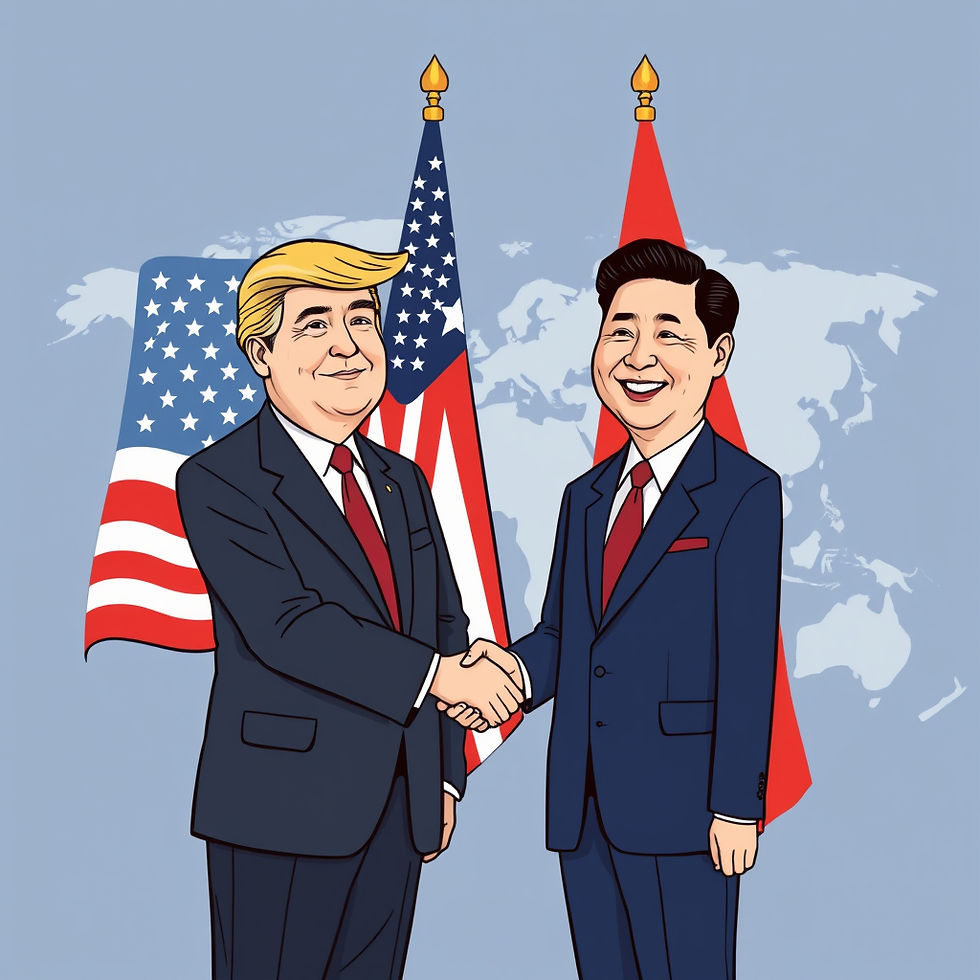
Originally scheduled for late March, the Trump–Xi summit was pushed to 14–15 May 2026, delayed by the prolonged US–Israel war on Iran. The last meeting between the two leaders was in Busan, South Korea in October 2025, where both sides agreed to lower US tariffs on Chinese imports from 57% to 47% — a meeting Trump later scored "12 out of 10." This week's Beijing summit is the follow-through, happening against the most complex geopolitical backdrop either leader has faced together.
Trade, Tariffs & Rare Earths: Back at the Table
The trade war has unfolded in fits and starts rather than along a straight line. US tariffs prompted Beijing to signal restrictions on rare earths and magnets — a move that rattled global auto, defence, and electronics supply chains. Since Busan, both sides have partially rolled back tariffs and set up a consultation mechanism to stabilize talks. The centrepiece this week is a proposed “Board of Trade,” a standing body to manage purchase commitments and tariff adjustments in non-sensitive sectors. Reports suggest it could oversee reciprocal goods flows worth tens of billions of dollars. Progress is evident, but the relationship remains transactional, not structural — mechanisms to reduce volatility are emerging, yet deeper issues of technology rivalry, subsidies, and security remain unresolved.
Artificial Intelligence: Racing Ahead Without Rules
Washington is increasingly alarmed by China's rapid development of advanced AI models and the absence of any communication guardrails between the two powers. Unlike nuclear weapons, there is no arms control framework, no crisis hotline, and no agreed protocol governing AI-driven incidents. Without dedicated channels, the risk of miscalculation — from autonomous systems to cyberattacks — is dangerously high. This summit may be the best near-term opportunity to establish even a basic framework before the technology outpaces diplomacy.
Iran: The World’s Flashpoint
The US–Israel war on Iran casts a long shadow over every agenda item. China has strong economic incentives to keep the Strait of Hormuz open but has shown limited appetite to publicly pressure Tehran. Notably, Iran's Foreign Minister visited Beijing just days before the summit — signalling China is positioning itself as a behind-the-scenes mediator. Whether Beijing can or will deliver meaningful influence over Iran remains the key unknown, and the answer will define how much goodwill Trump leaves Beijing with.
Taiwan: The Elephant in the Room
Taiwan remains China's highest-priority issue. Beijing will press Washington to restrain arms sales — particularly following the US$11.1 billion arms package to Taiwan in December 2025 — and to soften language on Taiwanese independence. Any shift, however subtle, will be closely watched by markets, regional governments, and defence planners across Asia.
My Views
The headline from this summit is likely to be cooperation, not confrontation — but with important caveats.
Against the backdrop of the Iran war, rising inflation, and looming US midterm elections, Trump has strong domestic incentives to deliver visible wins. I expect transactional announcements: purchase commitments, further tariff reductions, and the formalisation of the Board of Trade.
On Taiwan, I believe the US will deliberately lower the temperature. The Iran crisis gives both sides cover to frame the meeting around shared global responsibilities — statesmanship, not concession.
On trade and technology, cooperation will likely expand, but stay confined to non-sensitive sectors. Advanced semiconductors, AI chips, and defence-linked supply chains will remain contested terrain regardless of the optics.
The honest question to monitor: does this summit produce durable progress, or is it a or just a temporary pause before rivalry resumes? History — including the Phase One trade deal of 2020 — tells us that Chinese purchase commitments are easier to announce than to deliver. The Board of Trade, if it materialises, will be the real test of whether this time is genuinely different.
Watch what is signed — but more importantly, watch what is not said.


Comments